Project Structure
Goals
The overall goal of the iAM.AMR project is to elucidate and quantify the relative contributions of specific agri-food commodities and related environmental exposure pathways to Canadians’ overall exposure to antimicrobial resistant bacteria arising from the agri-food production system. To meet this goal, we endeavor to:
- create a conceptual model describing the agri-food production system, the drivers of AMR within this system, and the effects of AMR within this system (and beyond) on human, animal, and environmental health.
- collect data from national AMR and AMU surveillance programmes, associated research projects, and the scientific literature to describe the ecology and epidemiology of AMR in this system historically, and at present.
- quantify the individual effect of each driver of resistance – and identify omitted drivers – through a comprehensive literature search.
- integrate the conceptual model, epidemiological data, and the effect of each driver within a standardized modelling framework.
- use the developed mathematical model(s) to understand how drivers, such as AMU and Canadian production practices affect human exposure to antimicrobial resistant bacteria arising from the agri-food production system.
- engage industry stakeholders to inform identified knowledge gaps, communicate high-risk practices, and provide recommendations considering each human, animal, and environmental health.
- use these findings to inform broader AMR human risk-reduction initiatives.
Models
Model Building
Funding and History
Stakeholders from each human, animal, and environmental health disciplines are often engaged in addressing the risk posed by AMR in the agri-food production system. A project [1] by an associated team aimed to identify non-traditional stakeholders, who are often overlooked for engagement, but are nonetheless affected by AMR. As part of this project, the team created a large diagram of drivers, included below.
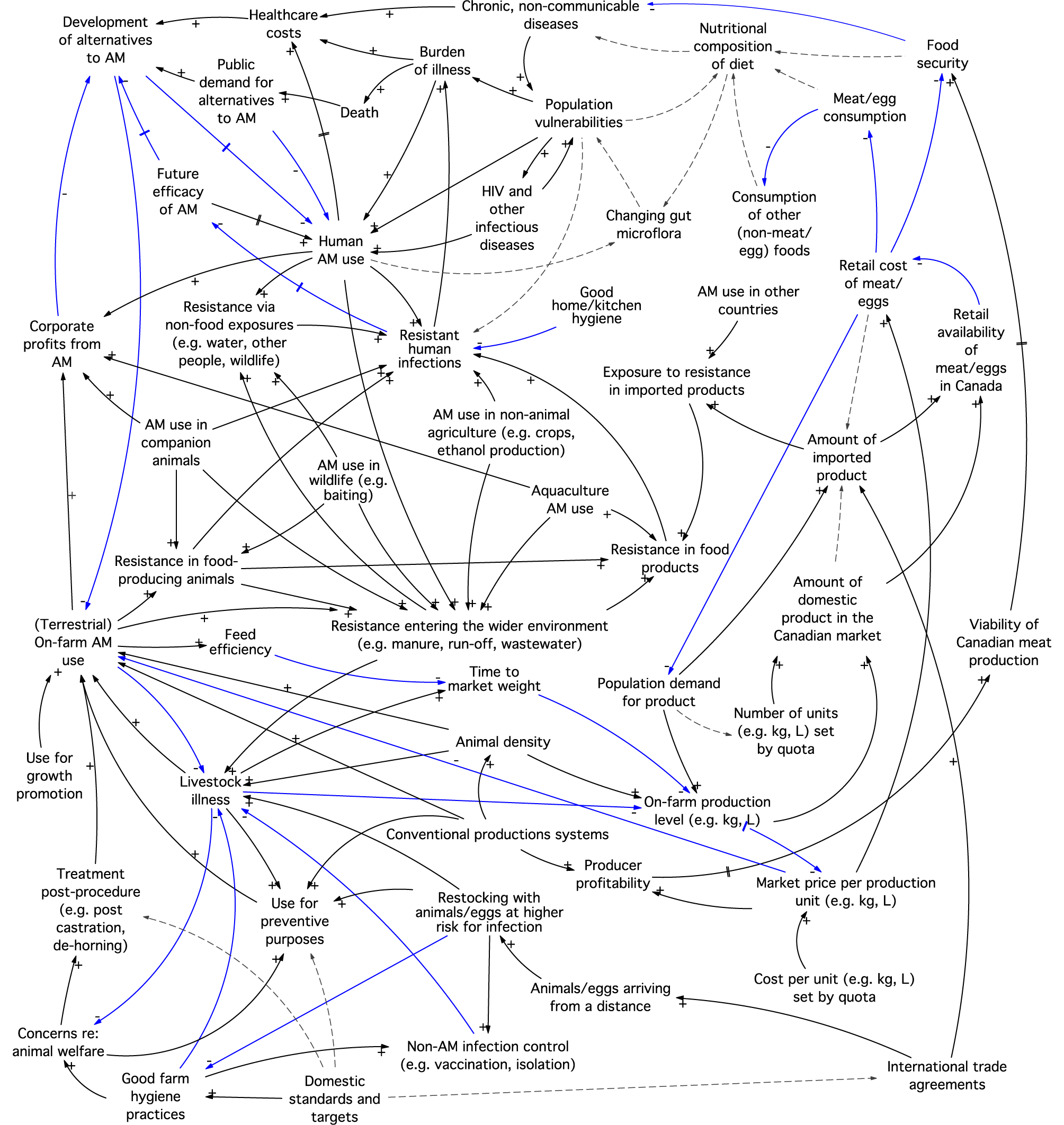
Figure 2 from Majowicz et al. (2018) demonstrating the complexity of the drivers of AMR.
The iAM.AMR project was born out of the concept of enumerating these identified pathways. Beginning in 2014, the iAM.AMR project was supported by the Ontario Ministry of Agriculture, Food and Rural Affairs (OMAFRA) New Directions Funding Program (Project ND2013‐1967), with a focus on the applicability of the models specifically to Ontario (a focus that remains today). Subsequently, the project has been continued as a sub-project of GRDI-AMR.
| [1] | Majowicz, S.E., Parmley, E.J., Carson, C. et al. BMC Res Notes (2018) 11: 170. https://doi.org/10.1186/s13104-018-3279-8 |
GRDI
The Genomics Research and Development Initiative (GRDI) funds genomic research across the federal science portfolio. A specific focus of GRDI is the development of shared priority projects (i.e. projects involving multiple federal departments). The GRDI-AMR project (2016 – 2021) is a nine million dollar shared priority project lead by Ed Topp at AAFC, which aims to use genomics to understand how the development of AMR in the agri-food production system impacts human health.
The project is broadly divided into five working groups; the iAM.AMR project is a significant, evergreen deliverable from work package five.